From Collection to Export: How Used Clothing Is Prepared for Global Markets
News Details
From Collection to Export: How Used Clothing Is Prepared for Global Markets
Buying second-hand clothing internationally involves more than simply finding products at a low price.
For overseas wholesalers and importers, it is important to understand where the clothing comes from, how it is sorted and graded, how it is packed, and how the final shipment is prepared for export.
So, how does used clothing export from China actually work?
At our factory, the process follows several main steps:
Collection → Sorting → Grading → Packing → Storage → Loading → Export
In this article, we take you through the process and show how used clothing is prepared for wholesale customers in global markets.
1. Collection of Used Clothing
The used clothing export process starts with collection.
Different types of second-hand garments are collected and transported to our facility. The incoming clothing can include T-shirts, shirts, jeans, trousers, jackets, dresses, children's clothing and other garments.
Because used clothing comes from different sources, the condition, material, style and season can vary.
The collected clothing therefore needs to go through further processing before it is prepared for international wholesale orders.
The initial collection stage provides the raw materials for the following sorting and grading processes.
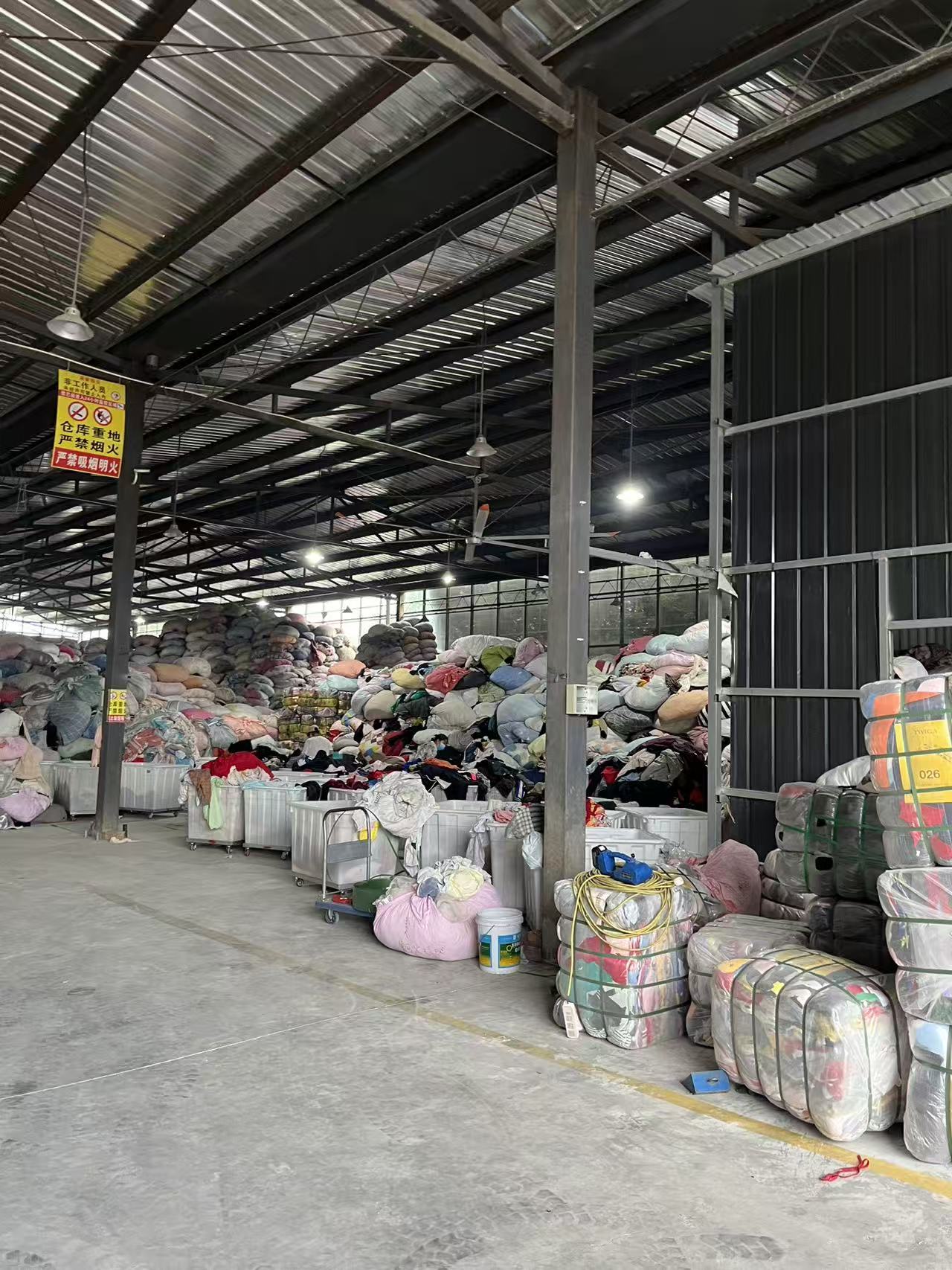
Used clothing collection at a factory in China
2. Sorting Used Clothing by Category
After collection, the clothing enters the sorting process.
Used clothes sorting is an important step because different buyers may need different categories of products.
Our workers separate clothing according to the required product categories.
For example, T-shirts, shirts, jeans, trousers, jackets and children's clothing can be sorted separately.
Some buyers may request mixed clothing, while others may be looking for specific categories.
The final product mix therefore depends on the buyer's requirements and available stock.
3. Grading and Quality Inspection
After category sorting, the clothing is inspected and graded.
The purpose of used clothing grading is to separate garments according to their condition and the quality requirements agreed with the buyer.
Workers check the general condition of the garments and identify items that do not meet the required standard.
Depending on the order, factors considered during inspection can include visible stains, serious damage, fabric condition, wear and tear, and overall appearance.
For international buyers, it is important to confirm the grading standard before placing an order because terms such as Grade A or Grade B can vary between suppliers.
We recommend buyers request actual product photos and videos.


